
How to Read a Hair Color Chart: Levels, Tones and Numbers Explained
Learning how to read a hair color chart takes about five minutes. After that, every code on the chart starts to make sense. Codes like 6.0, 5.62 or 7.35 look random at first. In fact, each one tells you exactly how light a shade is and which tones it carries.
This guide shows you how to read a hair color chart step by step. We also use real shades from a professional chart we produced, so you can see each rule on an actual product.
How to Read a Hair Color Chart: Level and Tone
Most shade codes have two parts. A point, a slash or a comma separates them.
The number before the separator is the level. It tells you how light or dark the shade is.
The numbers after the separator are the tones. They tell you which reflect the color has, such as ash, gold, copper or red.
For example, in 6.3 the 6 is the level (dark blonde) and the 3 is the tone (gold). Together, 6.3 means Dark Golden Blonde. Some brands write the same shade as 6/3 or 6,3, but the meaning stays the same.
How Hair Color Levels Work
When you read a hair color chart, the level always comes first. The scale runs from 1 to 10. Level 1 is the darkest, while level 10 is the lightest. Most brands follow this order:
- 1 – Black
- 2 – Darkest Brown
- 3 – Dark Brown
- 4 – Medium Brown
- 5 – Light Brown
- 6 – Dark Blonde
- 7 – Medium Blonde
- 8 – Light Blonde
- 9 – Very Light Blonde
- 10 – Lightest Blonde
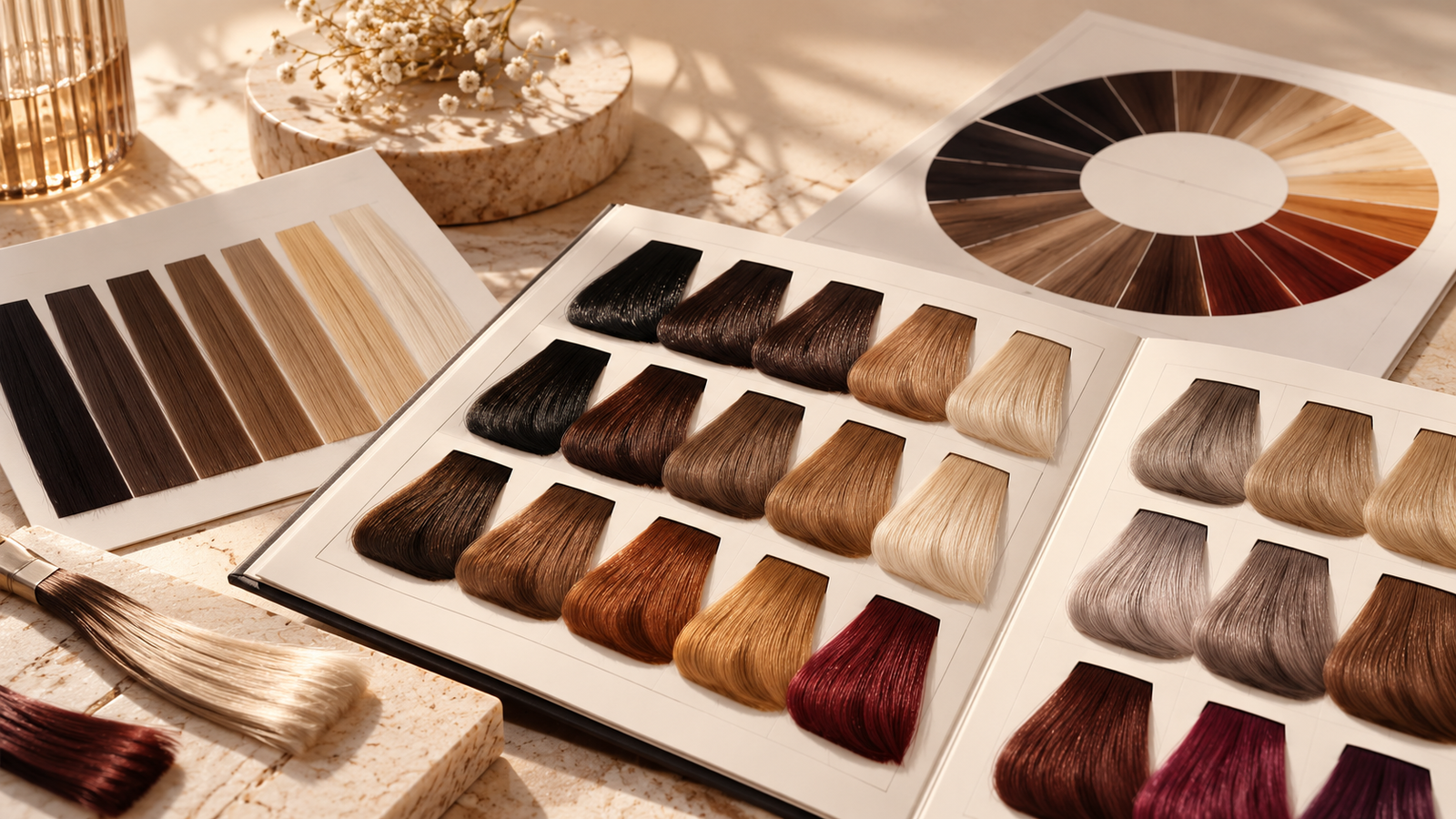
Some ranges also add levels 11 and 12 for high-lift blondes. On a well-built chart, the natural shades sit in one column from dark to light. As a result, you can see the jump between each level at a glance. On a typical professional chart, for instance, 1.0 Black, 3.0 Dark Brown, 4.0 Medium Brown and 5.0 Light Brown run straight down the first column.
Hair Color Chart Numbers After the Point: What the Tones Mean
The digits after the separator describe tone. Many European and Asian brands use a system like this:
- .0 – Natural
- .1 – Ash
- .2 – Violet or iridescent
- .3 – Gold
- .4 – Copper
- .5 – Mahogany
- .6 – Red
- .7 – Green or matte (varies by brand)
- .8 – Pearl or mocha (varies by brand)
The first digit after the point is the main tone. The second digit adds a softer tone underneath. That is why the order matters so much:
- 5.62 Light Violet Red Brown is mostly red, with a touch of violet.
- 6.43 Dark Copper Golden Blonde leads with copper and adds a hint of gold.
- 7.35 Medium Chestnut Blonde is mostly gold, with some mahogany.
- 8.13 Light Natural Ash Golden Blonde starts with ash and softens it with gold.
In addition, a repeated digit makes the tone stronger. A shade such as 6.66 would be a very intense red.
What Does a Zero Mean on a Hair Color Chart?
A single zero after the point, as in 6.0, means a natural shade with no added tone.
A double zero works differently. Shades like 6.00 or 7.00 usually mean an extra-natural or intense natural color. They carry more pigment, so colorists often use them to cover grey hair. On many professional charts, you can see them as 6.00 Cool Natural Dark Blonde and 7.00 Cool Natural Medium Blonde.
Finally, a zero before a tone digit, as in 6.003 Dark Mocha Blonde, depends on the brand. Here it marks a soft mocha with a natural base. Whenever you see an unusual code, check the name under the swatch.
Letter Codes: N, A, G, C and NW
Letter codes change how you read a hair color chart a little, but the logic stays the same. Some brands, especially in North America, use letters instead of tone numbers:
- N – Natural
- A – Ash
- G – Gold
- C – Copper
- R – Red
- V – Violet
- W – Warm
Brands also combine letters, and some mix letters and numbers on one chart. For example, 5NW is Light Natural Warm Brown, 6NW is Dark Natural Warm Blonde and 7NW is Medium Natural Warm Blonde. The number still gives the level, while the letters replace the tone digits.
Are Hair Color Numbers Universal?
Only partly. Almost every professional brand shares the level scale from 1 to 10. So a 6 means dark blonde nearly everywhere.
Tone numbers, however, are less consistent. The digits 7 and 8 often change meaning from brand to brand. Some ranges also invent their own codes for mocha, chocolate or fashion shades. For this reason, colorists always check the brand’s own chart before mixing. A chart that prints a clear name under every code removes the guesswork. You can learn more about the chemistry behind these shades in this overview of hair coloring.
How to Read a Hair Color Chart in Four Steps
Now you know the system, so here is the quick routine colorists follow.
First, find the level. The first number shows how light or dark the shade is.
Next, read the main tone. The first digit after the point gives the dominant reflect.
Then, look for a secondary tone. A second digit adds a softer tone underneath.
Finally, check the name and the swatch. The name confirms what the code means in that brand, and the swatch shows the true color in real light.
How to Find Your Own Hair Color Level
You cannot pick a shade until you know where you start. So stand in daylight and hold the natural swatches against your roots. Avoid your ends, because sun and old color often make them lighter. The swatch that blends into your roots is your level.
Most people sit somewhere between level 3 and level 6. If you fall between two swatches, colorists usually choose the darker one. Our guide on how hair color charts help colorists explains how professionals turn this reading into a formula.
How to Use a Hair Color Chart to Choose a Shade
Once you know your level, find your target shade and compare the two numbers. A gap of one or two levels usually needs only a single permanent color. However, a gap of three levels or more often means the colorist must lighten the hair first.
Tone matters as well. Warm skin tends to suit gold, copper and warm natural shades. Cool skin, on the other hand, tends to suit ash, violet and cool natural shades. Hold the swatch next to your face, not just your hair, to see how it works with your skin.
Frequently Asked Questions
Is it hard to learn how to read a hair color chart?
No. Once you know that the first number is the level and the digits after the point are tones, you can read almost any professional chart in seconds.
What does hair color 30 look like?
Hair color 30 usually means 3.0 or 3/0. It is a natural dark brown with no added tone, one step lighter than darkest brown.
What does 7.1 mean in hair color?
7.1 is a Medium Ash Blonde. The 7 gives the level and the 1 adds an ash tone, so the result is a cool, smoky blonde.
Which number is darker, 4 or 6?
Level 4 is darker. On every professional chart, a lower level number means a darker shade.
Why do hair color charts use fiber swatches instead of photos?
Printed ink and phone screens cannot show how a shade reflects light. Fiber swatches show the true color, so professional brands rely on them.
Read a Hair Color Chart With Confidence
Every shade code follows the same simple logic: level first, then tones. Once you know how to read a hair color chart, choosing and comparing shades becomes fast and accurate. Moreover, a well-designed chart makes that logic easy to see, with natural shades in order, tones grouped together and a clear name under every code.
Are you a hair color brand or distributor planning a new shade chart? We can help you lay out your range so every number is easy to read. Browse our book style hair color charts, explore our OEM manufacturing service, or send us your shade list for a quote.

Planning a Hair Color Chart?
Send us your shade range and format, and we will come back with a sample proposal.