

Hair Color Charts for Salons: How They Help Colorists
Hair color charts for salons do far more than decorate the color bar. They are the tool a colorist reaches for when a client says “something warmer, but not too red” and nobody in the room pictures the same shade. A good chart turns that vague request into a specific shade that both people can see and touch.
This guide explains how colorists and salon owners use shade charts every day, which formats suit which kind of salon, and what hair color brands should think about when they supply charts to their salon customers.
What Is a Hair Color Chart?
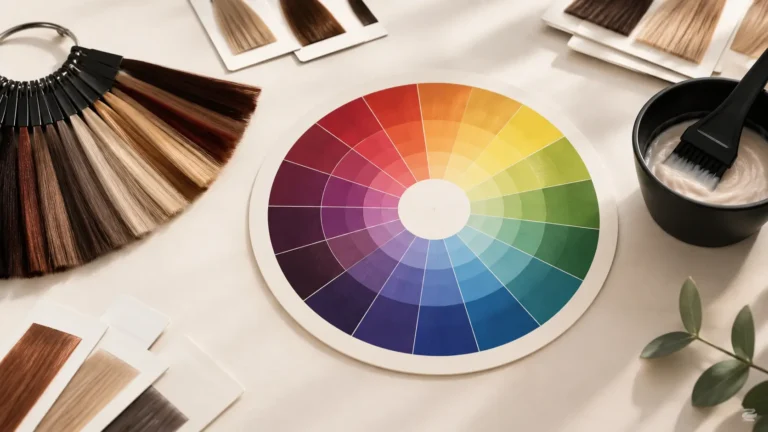
A hair color chart is a board, book or ring that holds a small swatch of colored fiber for every shade in a color range. Each swatch carries a shade code and a name, for example 6.0 Dark Blonde or 5.4 Light Copper Brown. Because the swatches are real fiber and not printed ink, they show how a shade reflects light. A photo or a phone screen cannot do that.
Most professional charts arrange the swatches by level and tone. Levels run from 1, which is black, up to 10, the lightest blonde. The number after the point describes the tone, such as ash, gold, copper or red. This system is widely shared across the industry, although each brand adds its own variations. If you want the background on how permanent color works, this overview of hair coloring is a useful starting point.
How Hair Color Charts for Salons Improve Client Consultations
The consultation decides whether a color service succeeds. However, clients and colorists rarely use the same words. One person’s “caramel” is another person’s “honey blonde”. A chart removes that guesswork in three ways.
Clients point instead of describing
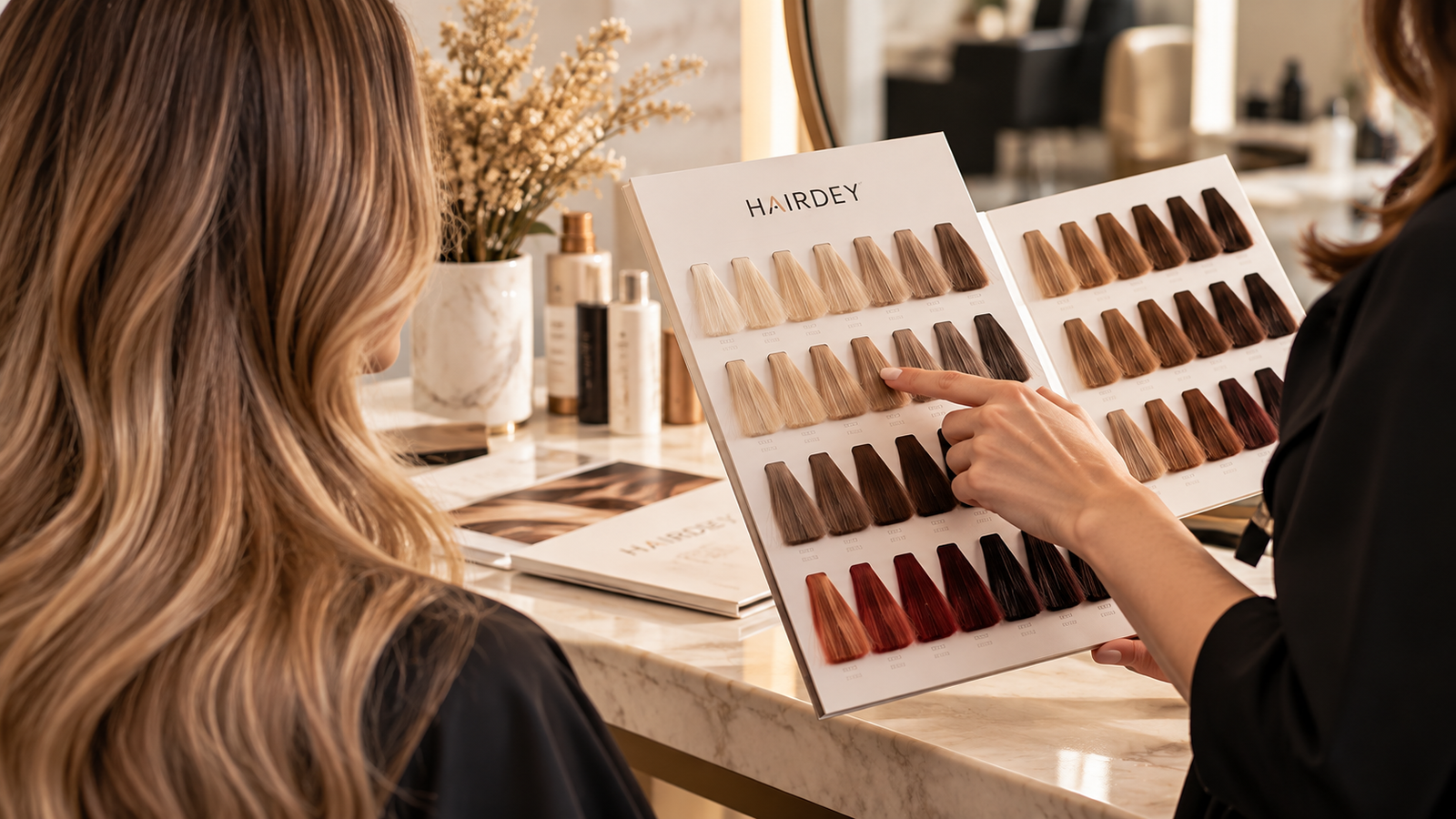
Most clients find it hard to describe a color, but almost all of them can point at a swatch they like. As a result, the conversation gets shorter and more precise. The colorist can also hold the swatch against the client’s skin and natural roots to check the match in real light.
Expectations are set before the bowl is mixed
A photo on a phone has been lit, filtered and edited. A swatch has not. When the client sees the true shade first, they know what to expect in the mirror. Therefore, fewer clients leave disappointed, and fewer come back asking for a correction.
Upgrades become easier to suggest
A chart shows the whole range at once. For example, a client who came in for a root touch-up may notice a copper or mocha tone two rows down. Many colorists find that the chart sells the next service for them, because the client discovers the option without any sales pitch.
How Colorists Use Hair Color Charts Behind the Chair
Consultation is only the first job. Colorists also rely on the chart during the technical work.
Finding the starting level
Before mixing anything, a colorist holds swatches from the natural series against the client’s roots. This shows the natural level. Since every formula starts from that level, a wrong reading here leads to a wrong result later.
Planning the formula
Next, the colorist compares the starting swatch with the target swatch. The gap between them shows how many levels of lift or deposit the service needs. It also shows whether unwanted warmth has to be neutralized along the way. In other words, the chart works as a map from the current color to the finished one.
Training new staff
Junior colorists learn a color range much faster with a chart in their hands. They can see how an ash tone differs from a gold tone at the same level, and how each tone shifts as the level rises. For this reason, many salons use the chart as a teaching aid during onboarding.
Keeping results consistent
In a busy team, every colorist needs to mean the same thing by “a 7.3”. The chart gives the whole team one reference. In addition, writing the shade code on the client record lets another colorist repeat the same result weeks later.
Which Hair Color Chart Formats Work Best in a Salon?
Not every salon needs the same chart. The right format depends on the size of the range, the space available, and how the chart will be handled. These are the formats salons and brands choose most often:
- Book style. A book style hair color chart holds a full professional range across several pages. It suits consultations at the chair and looks at home on a color bar.
- Ring and fan. A ring or fan chart keeps each swatch loose on a ring, so the colorist can lift a single shade up to the client’s face.
- Fold-out. A fold-out chart opens flat to show the entire range at one glance. It is light, which makes it popular with sales reps and smaller salons.
- Display box. A display box set is the premium option. Brands often choose it for a reception desk or a range launch.
- Strip. A strip chart is slim and economical, so it works well for compact ranges and retail shelves.
If you are comparing hair color charts for salons and are not sure which format fits your range, you can browse all of our chart categories side by side.
What Makes a Good Salon Hair Color Chart?
A chart only helps if the team trusts it. Whatever the format, good hair color charts for salons share a few qualities.
- Accurate swatches. The swatch has to match the result the color gives on hair. Once a chart proves unreliable, colorists stop using it.
- Clear labels. Shade codes and names should be readable at arm’s length, even under salon lighting.
- Swatches you can lift. Loose or looped swatches can be held against the client’s hair, which a flat printed card cannot offer.
- A durable build. A salon chart is opened dozens of times a day. So the cover, binding and swatch fixing all need to survive daily handling.
- A logical order. Levels and tones should follow a clear sequence, so any shade can be found within seconds.
Why Hair Color Brands Supply Charts to Salons
For a color brand, the chart is the sales tool that stays in the salon after the rep has left. Colorists tend to work with ranges they can see and understand. In addition, a well-made chart signals the quality of the color itself, while faded or loose swatches suggest the opposite.
That is why serious brands treat the chart as part of the product and not as an afterthought. At Hairdey, we manufacture hair color charts for salons, distributors and color brands in every format described above. If you already have a design and a shade list, our OEM manufacturing service builds it to your specification. If you are starting from an idea, our ODM service handles the design as well. Either way, you approve a physical sample before production begins.
Frequently Asked Questions About Hair Color Charts for Salons
Are hair color numbers the same across all brands?
Mostly, but not entirely. The level scale from 1 to 10 is widely shared. However, tone numbers can differ from one brand to the next, so a colorist should always check the brand’s own chart before mixing.
How often should a salon replace its chart?
Replace it whenever the brand updates its range, or when the swatches start to look faded, tangled or worn. A tired chart shows shades inaccurately, and that defeats its purpose.
Are the swatches made from real hair?
Most charts use a high-quality synthetic fiber that is colored to match each shade. This fiber holds its color for years and stays uniform from one batch to the next.
Can a salon or brand order a custom chart?
Yes. Brands, distributors and salon groups can order charts with their own logo, shade range and format. You can contact our team with your shade list to get a quote.
Choosing the Right Chart for Your Salon or Brand
Hair color charts for salons are a small investment that pays off in every consultation. They help clients choose with confidence, help colorists formulate accurately, and help brands keep their range in front of the people who use it. If you are planning a new chart or refreshing an old one, explore our product range or get in touch, and we will help you find the right format.

Planning a Hair Color Chart?
Send us your shade range and format, and we will come back with a sample proposal.